_edited.png)
.png)
PPA Solar: Zero Investment Solar for Businesses

Updated: Jan 21
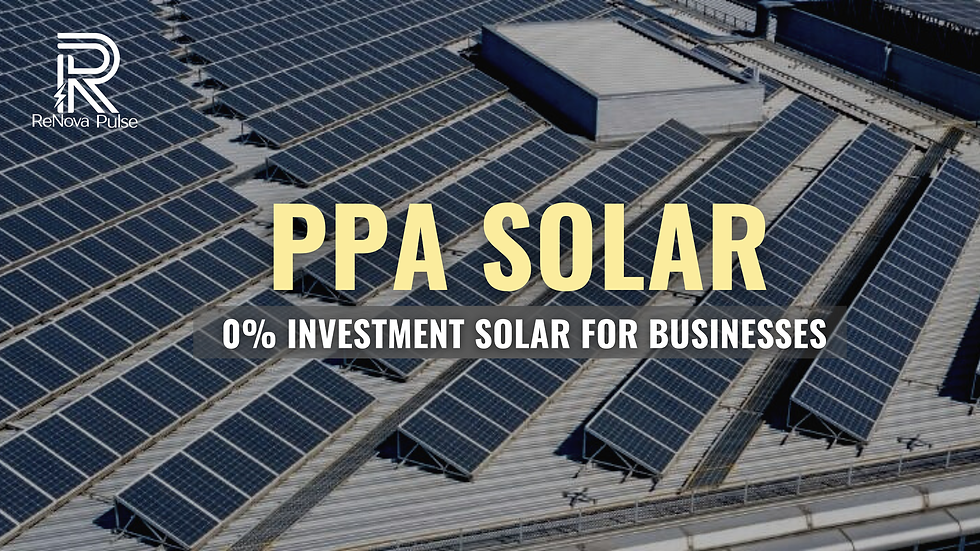
As energy prices rise, businesses and organisations are working to find more efficient and reliable sources of power. One method that is becoming increasingly popular throughout India is Power Purchasing Agreements (PPA) Solar. This agreement allows both large and small commercial and industrial clients to have access to solar energy, without the need to invest money in solar systems upfront, which makes it easier, faster, and less financially risky than other options available for businesses wishing to utilise solar power.
This post will help to clarify what PPA Solar is, as well as explain how it functions and the reasons it has developed into one of the most common solar procurement options available to businesses.
What is PPA Solar?
PPA Solar. PPA Solar refers to Power Purchase Agreements (PPAs) Solar Energy. Simply put, under a PPA model, you will have the solar developer install, own, and manage your solar energy plant. Your organisation does not pay for the cost of installing the solar energy system, but instead pays an agreed upon amount (tariff) to purchase the energy generated by the plant at a predetermined rate (tariff) for a period of time, typically between 15 and 25 years.
You pay for the solar energy you consume; in effect, you will be paying a lower and more predictable rate than you would have been paying on a monthly basis for traditional grid electricity.
Types of PPA Solar Models
On-Site PPA Solar
The solar plant is installed on your rooftop or within your premises. The power generated is consumed directly, reducing dependency on the grid and lowering electricity bills.
Off-Site / Open Access PPA Solar
The solar plant is located at a remote solar park. Power is transmitted through the grid using open access regulations. This model is suitable for large energy consumers with limited rooftop space.
Both models help businesses secure long-term renewable power at predictable costs.
The PPA Solar Model:
When you enter into a Power Purchase Agreement (PPA) with a solar developer, you agree to buy electricity generated by the solar plant at a fixed tariff (the PPA tariff). Below are the eight steps involved in this process:
Step 1: Assessment and Feasibility The solar developer will assess your energy usage profile and the suitability of your site for solar generation (the purpose of which is to make sure you have sufficient solar resources available).
Step 2: Installation The solar developer will finance, build, and install the solar plant at your site.
Step 3: Generation and Usage of Clean Energy The solar plant will produce electricity on an ongoing basis and this electricity will be available for you to uses at your facility.
Step 4: Purchase of Electricity Under PPA You will purchase electricity produced by the solar plant at a fixed tariff for the duration of the agreement.
Step 5: Ongoing Maintenance and Operation of System The solar developer will be responsible for maintaining and operating the solar system.
Benefits of the PPA Solar Model for Businesses: By entering into a PPA with a developer, your business can offload all technological, financial, and operational risks associated with installing solar technology.
Business Benefits of PPA Solar
One of the primary advantages of using PPA Solar is there are no capital outlays required to do so. Businesses can change to a solar system, without tying up capital that they can otherwise utilize to operate their business.
Reduced Electricity Prices
PPA tariffs are typically 20-40% less than standard electricity prices from a utility grid. Over time and for high-consumption industrial and commercial users, this leads to substantial savings.
Protection from Tariff Increases
Electricity tariff prices from the utility grid generally experience increases almost every year. Businesses using PPA Solar lock in their electricity tariff rates to allow for the future while offering potential long-term benefits and stability of pricing.
Little to No Maintenance Burdens
All aspects of the PPA Solar grid-connected electricity production system are handled by the solar developer, including monitoring, repairs, insuring of equipment, and performance tracking. Consumers have clean, renewable energy without having the hassles associated with the operation and maintenance of renewable energy systems.
ESG & Sustainability
The use of PPA Solar significantly decreases the amount of carbon emissions released into the atmosphere. The use of PPA Solar by an organization will help the organization attain its corporate responsibility, sustainability, and ESG goals.
Is PPA Solar Financially Worth It?
For most commercial and industrial consumers, the answer is yes.
Since there is no capital investment, savings start from the first electricity bill. Over a typical PPA tenure, businesses can save crores in energy costs compared to grid power or diesel-based generation.
PPA Solar is especially beneficial for:
Manufacturing units
Warehouses and logistics parks
IT parks and corporate offices
Malls, hotels, and hospitals
Educational institutions
If your electricity consumption is consistent and long-term, PPA Solar becomes a highly cost-effective solution.
Things To Consider When Signing A Solar Power Purchase Agreement (PPA).
It is recommended that all businesses do their research before signing a solar power purchase agreement (PPA).
Here are some key items to consider:
1. What type of tariff does the PPA Solar Offer? (Fixed or Escalating)
2. How long will the Contract Last and What Is the termination Clause?
3. What Is the Minimum Amount of Energy that the Business must purchase Under The PPA?
4. What Is the Performance Guarantee for the Solar System?
5. What terms are in place for the use of the roof or land to build a Solar System?
Working with a reputable solar developer with a good track record will provide transparency and allow for a good understanding of the long-term benefits of solar.
PPA Solar Vs. Capital Expenditure (CapEx) Solar
CapEx solar requires some upfront investment but typically returns higher long-term profits than PPA Solar, as PPA Solar focuses on immediate savings with no risk associated with owning the solar system.
If your business wants to save money on energy but does not want the financial responsibility of owning the solar system, then the PPA solar model is the best option.
The Future of PPA Solar In India
With the increasing demand for electricity, support from governments for renewable energy projects, and growing interest by businesses to become sustainable through solar energy, the future growth of the PPA solar segment of the energy market is expected to be rapid.
There has been a shift by many businesses away from simply using the PPA as a cost-savings tool and, instead, toward seeing it as a long-term strategic energy decision.
As more businesses begin to pay attention to long-term energy plans, the need for PPA solar will become part of the development of resilient, sustainable, and low-cost energy systems.
Final Thoughts
PPA Solar removes the biggest barriers to solar adoption—high capital cost and operational responsibility. It offers businesses clean power, predictable pricing, and immediate savings, all without investment risk.
For companies looking to control energy expenses, improve sustainability, and stay future-ready, PPA Solar is one of the smartest ways to go solar today.
.png)

.png)
Comments